"Ken" called to enlist my opinion about getting off lithium. Like many other bipolar support group leaders in the Philadelphia area - and certainly around the country - he had been on lithium nearly 2 decades and wondered at the possibility of going off. Nearly everyone asks their doctor about this. Opinions are mixed. Ken's doctor said she'd take him off but wanted to put him on some of the newer bipolar meds.
What were my thoughts on this? Ken knows I successfully came off lithium in 2000 and am symptom-free. Or, cured as I like to call it for emphasis.
Ken and I came up with a checklist of things. Because he is a support group leader he is an example to many others and his experiences, like mine, will be remembered. Neither Ken nor I are doctors but know ourselves and our minds better than anyone else. Both of us fervently believe in medication for bipolar disorder. But when a person reaches their MID-FIFTIES they may wish to consider going off meds.
If so, a strategy must be in place. Ken and I completed the strategy over the phone.
Since he is not working, he must maintain a strict daily schedule of activity which includes leaving home at least once a day to be among people. He will attend other area support groups to keep busy. He will engage in simple exercise such as walking. But above all, he will not isolate.
He will also not act upon any suicidal thoughts. Lithium is a strong protector against suicide. The ideation may occur but rarely the attempt. It is okay to think about killing yourself, this is an unfortunate symptom of bipolar disorder, but you must redirect your thoughts should they occur. Ken will do that.
I told him when I went off lithium I was assailed by suicidal thoughts. This was due to my doctor's failing to wean or titrate me down. A nice titration, which can be fairly brief in the case of lithium, should avoid this nastiest of all symptoms.
Lending credence to Ken's desire to get off the lithium is his own doctor-supervised titration recently from lithium due to digestive problems. Ken was lithium-free for 18 days. He told me he had never felt better in his life. He said, "I know this sounds funny but I felt like the real me. I felt I had a lot of energy and best of all my mind could think clearly for the first time since I was a young man."
He even had some difficult challenges with new members to his group which he handled beautifully. I commented that this was undoubtedly b/c he's mellowed over time, learned more about himself and life thru counseling and life experience, and that he's fully capable of handling challenges w/o being doped up.
I said that when I was on lithium I never felt truly like myself. It was as if there was an invisible shield between me and the world. We all have our own way of expressing such 'drugged-up' feelings. However, I said, most people I've talked to do not feel that way. They believe lithium normalizes them which is even better.
Ken must be extra-vigilant in gauging his moods to make sure he is not dipping into depression or rising into mania. If so, he must immediately get in touch w/the doctor and therapist for Plan B which may include more meds. We mustn't jeopardize his well-being. Talking things out w/his therapist or a good support person may be enough to sustain him thru any rough waters he may encounter. He must learn to endure any painful feelings such as anxiety, telling himself this is a temporary situation that will pass. This is the natural 'cognitive therapy' people give themselves.
I told him I had a lot of confidence in him and believed he could do it. I forgot to mention the addition of omega fatty acids to his diet, in pill form, but I'll call him tomro to mention it. I myself never got into vitamins b/c I abhor taking pills. I'd rather broil a nice thick piece of wild salmon and eat it on the back porch while listening to the cicadas sing.
Showing posts sorted by relevance for query going off meds. Sort by date Show all posts
Showing posts sorted by relevance for query going off meds. Sort by date Show all posts
Monday, August 24, 2009

Tuesday, July 30, 2013
Going off Lithium - I went off and learned, to my shock, my bipolar went away
Lithium carbonate. Read about lithium here.
Also read my post "We loved lithium until it turned on us," which features the fascinating history of lithium.
New Directions had a phone call today from a woman from Maryland.
"Amy" found us on the Internet. Her husband is on lithium and is in Stage 3 of Chronic Kidney Disease.
"Chaz" is 69 yrs old. His doctor is going to wean him off the lithium and put him on Depakote while he's being weaned off.
Amy wanted to know if Depakote was a good drug. Read more about it here.
Yes, I said. Some of our members are on Depakote. What I didn't say is that childbearing women should not take it. Read more here.
Just wanna mention, I am not a doctor or a psychiatrist.
But.... I pay attention.
In answer to Amy's question, I called some of our members to ask what drugs they took after going off lithium.
BTW, Amy thanked me for our help.
We'll start with GINNY, since she's the most complicated case.
Please note that 'antipsychotic' drugs are often used as mood stabilizers.
Click on each drug below to learn more about them.
Antipsychotics: Seroquel, Risperdal, Geodon, Abilify, Latuda.
Mood stabilizers: Lithium, Depakote, Tegretol, Trileptal.
Ginny, 66, takes Wellbutrin (an antidepressant), Risperdal (antipsychotic) and Provigil (a wakefulness-promoting drug or stimulant).
She is probably in Stage 3 or 4 of Chronic Kidney Disease. Her kidney doctor has her on a special diet to preserve kidney function. She maintains a diet low in protein, potassium, calcium, phosphorus and sodium.
Here's my post on my kidney-healthy diet I was on before I had my kidney transplant in April, 2011, courtesy of my daughter Sarah.

JUDY sees Dr Don Levin in Doylestown, PA, who no longer prescribes lithium.
Read about Dr Levin in the Times here.
I just happen to have Judy's photo

HELEN, one of our group leaders, writes:
For my mood stabilizer, I use Lamictal (generic - Lamotrigine) 100 mg in the morning and 100 mg at night. I could not stand the side effects of Lithium. It made me feel spacey and lethargic. I was thirsty 24-7, which means that I needed a bathroom close by. It was tough to swim or ski, as I had to leave the activity, often, to go to the women's room. I tried Depakote after going off the Lithium. That too made me tired and unmotivated. Lamictal is the mood stabilizer that makes me feel most like I'm not on something. I am grateful that it exists.
Helen Kirschner
My dear friend DENIS is on DIALYSIS, from losing kidney function due to lithium. He had a transplant which lasted six years, but then certain conditions made his body reject the kidney.
Denis is on Lamictal.
MRS F, who's 75, and stable after going off the lithium, takes Zoloft, Lamictal, Klonopin, and Remeron.
I should mention that my doctor did not wean me off lithium and I was suicidal for the better part of 8 months. If you've never been suicidal, you have no idea what it's like. It's as if a FORCE as great as the winds of a tornado is pulling at you urging you to kill yourself.
If you wish, you can read my Keys to Recovery with Stop-Suicide Plan, which I learned about that dreadful year. Ironically, it was the year we won our first grant from the Patricia Kind Family Foundation. But, when suicide is calling her siren song, nothing can help you unless you figure out how to outwit it.
Checking into the hospital is often advised.

Scott will hang it up tomorrow in the front yard since hummingbirds have found our feeder.
Life is good. Life is great. I've been on NO MEDS for a dozen years. Was it all a dream that I had manic-depression for 20 years?
Saturday, August 21, 2010
Letter to Eric: Your choice whether to take meds
Dedicated to my friends, met and unmet, who have bipolar disorder
Dear "Eric,"
Yes, it’s that time of year when your mom, pushing 80, phones me and says, Will you give Eric a call? He stopped taking his meds and he’s suicidal again.
Look, taking meds are a drag. No one knows that more than I do. They’re expensive. They have side effects. They may make you feel weird. They remind you, when you see them sitting on your kitchen table or your desk, that you’ve really got a problem. An illness. A disorder. And it won’t go away.
You did the right thing, Eric, going off your meds, once or twice. The majority of people with bipolar disorder do this. However, almost without exception, they learn the illness comes back. With a vengeance, of course. The illness is mean, we know that. And when we go off, we think, “Perhaps I can make it this time.” I believe you’ve been going off your meds once a year since your diagnosis 15 years ago. Yes, we must question everything in life. Is there a God? Should I become a vegetarian? Is that a maple or an elm tree? Do I really need meds?
Your mom tells me you can’t find a psychiatrist you like. Or a therapist or a support group. I understand. I too am choosy. We must be. I go by the rule of thumb that only 10 percent of all professionals are excellent. Excellence is what we strive for. What we must have.
Since you live in the Northeast Corridor, Eric, you must have hit the 90 percent substandard shrinks. A good shrink should have two qualities: competency and personality.
His or her competency should encompass top knowledge about the psychopharmacopeia. He should be well-read about new developments and new meds. The doctor must be a good listener. His practice consists of seeing one sick person after another. He must have the stamina to remain fresh -– and wide awake -- when he sees you. He must devote total attention to you, as if you are his own sweet child. Yes, we demand that of our healers.
And, know that he demands no less of himself. That is, if he is one of the Top Ten.
Doctors have their favorite drugs. Let’s say that “Dr Marshall” prefers lithium to treat his bipolar patients. But you, Eric, as a well-informed individual, do not want lithium. Dr. Marshall must respect your opinion. If not, we toss him out. We are very very particular about the man or woman who is medicating our minds.
If competency is the number one quality we seek in a psychiatrist, what role does their personality play? A huge role. We all come with a personality. We’re attracted to certain people, repelled by others. It’s awfully difficult to follow a doctor’s orders if we don’t feel a connection with them.
That’s why I suggest you find a highly recommended psychiatrist and have an initial telephone exchange with them. Here’s a subtlety few people know about. A doctor-recommended psychiatrist is not the same as a patient-recommended one. You must get a recommendation from a lay person, a fellow patient, not a professional. Then go with your gut feeling.
Knowing you, Eric, you are probably asking yourself, Why do I need to see a therapist? Aren’t meds enough? Allow me to be blunt. No, medication is not enough. Meds are the first defense against the illness, but did you know that through psychotherapy -– the conversation that ensues between ourselves and a competent caring therapist –- that changes actually occur in our brain? Positive changes that are nearly as effective –- sometimes even moreso –- than our meds?
The goal of therapy is to help you evolve into your best possible self. To bring out the “greatness” inherent in every individual. Most people diagnosed with bipolar disorder feel shame for this diagnosis. You will want to address this with your therapist and then move on. Through therapy you will get to know yourself. And, believe it or not, with a therapist’s help you can learn to change things about yourself you don’t like. Goal-setting is paramount. You are mid-life. A Top Ten therapist can help you achieve your dreams.
No good support groups in the Northeast? Hmmm. Questionable. Since support groups are comprised by nature of numerous individuals, there’s more to find fault with in a support group than a single individual. So, here you will learn to strengthen your Tolerance and Compassion. (Read Thich Nhat Hanh, my favorite man of compassion. He’s a Buddhist monk.)
I readily acknowledge the difficulty of attending a support group. You will see others with your same condition. Some may be attorneys or schoolteachers, others subsisting on Disability, barely able to get out of bed to make a meeting. Some may have been destroyed, temporarily, by one of our outlandish ‘highs’ where we lose everything as our illness turns us into a profligate. And then there are the self-medicators among us who lost everything through abuse of various substances. Our disorder casts a wide net.
Attending a support group takes all our courage. For –- guess what? -– it is at the support group that we meet ourselves, face to face. The ultimate mirror held up showing every crease, every freckle, every eyelash, every wrinkle. “Take it away! Take it away!” you may cry.
Who are we really, Eric? Who are we at the core? We certainly are not our illness. The illness exerts only a small influence on our being, if we properly manage it. If, that is, we choose to manage it through medication and therapy. Only you can decide what to do with the rest of your life. To go or stay. To take or not to take. To live or die.
Freedom demands we understand obstacles that get in the way of our living our very best life. My wish for you, Eric, is that you make the very best choice to reside happily in the world with your mother who loves you, your two beautiful children who love you, and yourself, who you may learn to love, if you ask for help.
Warmly,
Ruth Z Deming, MGPGP
Director
New Directions Support Group of Abington PA
Dear "Eric,"
Yes, it’s that time of year when your mom, pushing 80, phones me and says, Will you give Eric a call? He stopped taking his meds and he’s suicidal again.
Look, taking meds are a drag. No one knows that more than I do. They’re expensive. They have side effects. They may make you feel weird. They remind you, when you see them sitting on your kitchen table or your desk, that you’ve really got a problem. An illness. A disorder. And it won’t go away.
You did the right thing, Eric, going off your meds, once or twice. The majority of people with bipolar disorder do this. However, almost without exception, they learn the illness comes back. With a vengeance, of course. The illness is mean, we know that. And when we go off, we think, “Perhaps I can make it this time.” I believe you’ve been going off your meds once a year since your diagnosis 15 years ago. Yes, we must question everything in life. Is there a God? Should I become a vegetarian? Is that a maple or an elm tree? Do I really need meds?
Your mom tells me you can’t find a psychiatrist you like. Or a therapist or a support group. I understand. I too am choosy. We must be. I go by the rule of thumb that only 10 percent of all professionals are excellent. Excellence is what we strive for. What we must have.
Since you live in the Northeast Corridor, Eric, you must have hit the 90 percent substandard shrinks. A good shrink should have two qualities: competency and personality.
His or her competency should encompass top knowledge about the psychopharmacopeia. He should be well-read about new developments and new meds. The doctor must be a good listener. His practice consists of seeing one sick person after another. He must have the stamina to remain fresh -– and wide awake -- when he sees you. He must devote total attention to you, as if you are his own sweet child. Yes, we demand that of our healers.
And, know that he demands no less of himself. That is, if he is one of the Top Ten.
Doctors have their favorite drugs. Let’s say that “Dr Marshall” prefers lithium to treat his bipolar patients. But you, Eric, as a well-informed individual, do not want lithium. Dr. Marshall must respect your opinion. If not, we toss him out. We are very very particular about the man or woman who is medicating our minds.
If competency is the number one quality we seek in a psychiatrist, what role does their personality play? A huge role. We all come with a personality. We’re attracted to certain people, repelled by others. It’s awfully difficult to follow a doctor’s orders if we don’t feel a connection with them.
That’s why I suggest you find a highly recommended psychiatrist and have an initial telephone exchange with them. Here’s a subtlety few people know about. A doctor-recommended psychiatrist is not the same as a patient-recommended one. You must get a recommendation from a lay person, a fellow patient, not a professional. Then go with your gut feeling.
Knowing you, Eric, you are probably asking yourself, Why do I need to see a therapist? Aren’t meds enough? Allow me to be blunt. No, medication is not enough. Meds are the first defense against the illness, but did you know that through psychotherapy -– the conversation that ensues between ourselves and a competent caring therapist –- that changes actually occur in our brain? Positive changes that are nearly as effective –- sometimes even moreso –- than our meds?
The goal of therapy is to help you evolve into your best possible self. To bring out the “greatness” inherent in every individual. Most people diagnosed with bipolar disorder feel shame for this diagnosis. You will want to address this with your therapist and then move on. Through therapy you will get to know yourself. And, believe it or not, with a therapist’s help you can learn to change things about yourself you don’t like. Goal-setting is paramount. You are mid-life. A Top Ten therapist can help you achieve your dreams.
No good support groups in the Northeast? Hmmm. Questionable. Since support groups are comprised by nature of numerous individuals, there’s more to find fault with in a support group than a single individual. So, here you will learn to strengthen your Tolerance and Compassion. (Read Thich Nhat Hanh, my favorite man of compassion. He’s a Buddhist monk.)
I readily acknowledge the difficulty of attending a support group. You will see others with your same condition. Some may be attorneys or schoolteachers, others subsisting on Disability, barely able to get out of bed to make a meeting. Some may have been destroyed, temporarily, by one of our outlandish ‘highs’ where we lose everything as our illness turns us into a profligate. And then there are the self-medicators among us who lost everything through abuse of various substances. Our disorder casts a wide net.
Attending a support group takes all our courage. For –- guess what? -– it is at the support group that we meet ourselves, face to face. The ultimate mirror held up showing every crease, every freckle, every eyelash, every wrinkle. “Take it away! Take it away!” you may cry.
Who are we really, Eric? Who are we at the core? We certainly are not our illness. The illness exerts only a small influence on our being, if we properly manage it. If, that is, we choose to manage it through medication and therapy. Only you can decide what to do with the rest of your life. To go or stay. To take or not to take. To live or die.
Freedom demands we understand obstacles that get in the way of our living our very best life. My wish for you, Eric, is that you make the very best choice to reside happily in the world with your mother who loves you, your two beautiful children who love you, and yourself, who you may learn to love, if you ask for help.
Warmly,
Ruth Z Deming, MGPGP
Director
New Directions Support Group of Abington PA
Wednesday, June 26, 2019
Robert Howard Lokoff Funeral Today, June 26, 2019

Hard to believe that Rob Lokoff - August 31, 1958 - June 22, 2019 - has passed away.
He was 60 years old.
Scott and I drove to the Joseph Levine Funeral Home where every spot in the parking lot was taken.
The sanctuary, above, was filled and people were in a receiving line to offer their condolences.
If you wish, remember Rob Lokoff with a gift from New Directions Support Group. Make a PayPal donation from our website, or send to New Directions, Box 181, Hatboro PA 19040.
I had been a good friend of Rob's for many years, never having met most of his large family. Rob had been married - and divorced - to Naomi and they had three children. They met in a psych hospital. Naomi and her husband were there.
Rob would always help me out. He was a great morale-booster. He would also tell me how he would drive his elderly relatives to appointments. Aunt Thelma, among them.
He loved helping people.
Just checked the Jewish Exponent. His mother's death is on there, but not Rob's.
Altho Rob, at the time of his death, was living in his condo in Conshohocken, I knew him when he lived in an apartment in Elkins Park. His sons, Jacob and Sam, would come over and he'd make them lunch. His eldest, Amy, was away at college. He always had a piano, which he loved to play. His sons and he would also play tennis outside on the courts.
I'd visit there upon occasion and use the pool. He also hosted some truly great accompanists in his apartment. Wouldn't it be great, he'd say, if he could support himself as a musician?
Once, New Directions held a performance at the Daily Grind Coffee Shop in Hatboro, PA, and there was Roberto, as I used to call him, with his best friend Phil Martino, playing the drums.
Family members ascended the podium and spoke. Every single one of them was in shock!
Long Beach Island was their meeting place on the Jersey shore.
He never felt comfortable meeting there, as there were so many prominent people, including his dad, who had founded Bryn Mawr Stereo. His dad was at the funeral.
Hugging and kissing were of immense comfort to everyone there.
I wanted to spend more time looking at the photo time-line - below - but the funeral woman pulled it away. Where, I asked, will Rob be buried?
The family will decide that, she said. Shiva will be at brother Jamie & Jodi Lokoff's house in Philly.
Rob was driving at top speeds in Long Beach Island, and, writes Ada, the article said he hit a trash truck and another truck at a red light going 100 mph.
The EMTs tried to save him but to no avail. They said there was an aura about the dying individual. Something really special.
The funeral was very emotional. Dr. Pam London sat next to me and was dabbing her eyes. (She now works at Eagleville Hospital.)
All sorts of theories were mentioned as to why he died now.
Possibly because his mom, Kay Lokoff, wasn't there to protect him.
We love you Robert Howard Lokoff.
*
Comment by Sandy Salveter on Rob’s death:
I met Rob Lukoff around 2005, when I first started going to ND. He was on his meds and under control at that time, but had just come out of a divorce after going off his meds and ending up walking the streets of a California town. I think his parents went to look for him and found him on the streets, and brought him home to PA. It was too much for his wife, who initiated the divorce.
I always admired him so much because he always kept trying, even in the face of all the difficulties his bipolar caused him. He talked about how much his Mother and Father supported him. He graduated with a degree in music, and was quite a good musician. He was part of a group that played at various social functions, which he enjoyed.
Rob was a gentle man, who when off his meds became a different, wild-eyed, out-of-control person when his interior devils took over. This last time, the devils took him away forever. I hope they have finally let go of him, so he can rest in peace as his own true self, a kind and quiet man, who I am so glad I had the honor of knowing.
Rest in peace, Rob.
Sandy Salveter


All sorts of theories were mentioned as to why he died now.
Possibly bc his mom, Kay Lokoff, wasn't there to protect him.
Read her obit here. She died in 2017 at 81. Respiratory failure.
Again, Rob has three children. Daughter Amy led the program. I'd heard of everyone but never actually saw them until today.
The main point everyone emphasized was what a loving man he was.
Until, that is, his bipolar disorder struck. He became like another person.
His family clustered around him trying to help him.
- Did you talk to Rob today?
- Where is he?
As a young man in his 20s, the bipolar reared like a stallion.
He did have a group of friends and had a following, said one of his brothers.
Yrs and yrs ago I met his ex-wife Naomi at a bar mitzvah. There she was today with her partner, Mark.
Fred Lokoff, in a yarmeka and dark glasses, was also at his son's funeral.
But where was Rob's cell phone, asked Jacob.
The men in the tow truck found it.
Jacob played the tune that Rob must have been listening to at the moment of impact.
Elton John's DON'T LET THE SUN GO DOWN ON ME. Click it.
Rob is walking the Yellow Brick Road now still confused, still trying to help himself.
Will he ever be found?

We love you Robert Howard Lokoff.
*
Comment by Sandy Salveter on Rob’s death:
I met Rob Lukoff around
2005, when I first started going to ND. He was on his meds and under
control at that time, but had just come out of a divorce after going off
his meds and ending up walking the streets of a California town. I
think his parents went to look for him and found him on the streets, and
brought him home to PA. It was too much for his wife, who initiated the
divorce.
I always admired him so much because
he always kept trying, even in the face of all the difficulties his
bipolar caused him. He talked about how much his Mother and Father
supported him. He graduated with a degree in music, and was quite a good
musician. He was part of a group that played at various social
functions, which he enjoyed.
Rob was a gentle
man, who when off his meds became a different, wild-eyed, out-of-control
person when his interior devils took over. This last time, the devils
took him away forever. I hope they have finally let go of him, so he can
rest in peace as his own true self, a kind and quiet man, who I am so
glad I had the honor of knowing.
Rest in peace, Rob.
Sandy Salveter
MEMORIUM TO ROBERTO
Before you go
Sit in my kitchen
once last time
Iced tea on this
scorching hot day?
A butter cookie
from the Italian market?
Let me look at you
I mean, really look at you
Your eyes, shining like
the morning star
The places you've been!
A certain sadness
unmistakable
upon your face
You, like all of us,
are whims of the world
blowing like a green leaf
on my maple, never
really gone,
never ever forgotten.
Tuesday, August 2, 2016
Getting Off Meds - Shari - Poem on Inspector Morse played by the late Jack Thaw


FACEBOOK POEM
Inspector Morse is played by
Jack Thaw. I remember you, I
say to the laptop screen
How once we were young
did our best work, you
bibliophile you, and
now rest under the stars.
I'm not planning on
croaking any time soon,
look how my arms and
legs take these hills
and valleys of the
neighborhood, a wild
pony who still struts
her stuff.
***
As usual I watered the extensive gardens, sent a friend a postcard, with wetted hair, walked around the hilly block. Hey, I can do it, I can do it, thinks I.

Not only does she have bipolar but also allied conditions including PTSD and extreme thoughts of suicide.
And this woman wants to go off meds? She's in her mid to late fifties.
I've written a lot about the topic. Click here for about 7 minutes of fascinating reading.
Shari has a lot going for her that may help her get off meds.
"Jack" is her faithful and loving companion, always there for her.
1 - Work with a psychiatrist to titrate you off (wean). I'm adamant about this.
2 - Prepare.... for the worst. What might happen to me? Suicidal depression. The slower the titrate the better. A 60-yo friend of mine on meds since a teenager got off all her medicine in a year and a half. After each med was thoroughly out of her body, she got flu-like symtpoms and also felt a "ping" in her body.
She's been off for good for five years.
3 - Since I know Shari somewhat, here's what I suggest she do....
Pray. She can pray before getting out of bed or go to synagogue during the day.
Walk. Go for energy-enhancing walks or to the gym, if you belong. The gym is good b/c you'll be around people, which is an energy-enhancer in itself.
Do not stay in bed one more minute than necessary.
Do active activites.
Paint.


 Okay to do PASSIVE activities at Naptime or Bedtime but not during the day.
Be with people, Shari. Go visit friends and family who make you feel good about yourself.
Watch out for things that "trigger" you. Once you attended many Suicide Addicition Groups. Stay away from them. No need to call to advise them. Just let it be.
During your titration, visit museums and shrines. How about an inspiring Buddhist temple?

In summation, Shari:
Very slow titration with a psychiatrist.
Use all of your creative skills.
Stay away from "triggers" - people places things - including certain support groups.
Stay in your spiritual zone.
Cook! Make healthy foods.

Sunday, March 24, 2013
Sharon Brings Them In ! Talk on Family Involvement With Mood Disorders

Whole families showed up to learn how to communicate with the diagnosed individual.
I held up our Compass and encouraged everyone to take a copy and give a few to their health-care providers. The Kaleidoscope is our literary section and indeed, Martha, a fine poet who wrote the lead poem "Time" in the Kaleidoscope was there.
A 70-year-old man had recently retired and hit the abyss of depression. He was grieving the loss of his job and his identity now that he wasn't working.
You need a plan when you retire, said Sharon.
The medicine had just started to kick in. Sharon also suggested 'talk therapy.'
Retiring w/o a plan means that the routine you've relied on for most of your life has vanished. These circadian rhythms are one way our body takes care of itself.
His long-suffering wife was there, crying, as well as their four grown children and spouses. Such great support for him. They were at a loss on how to help him, how to talk to him.
Sharon suggested he go for daily walks and develop hobbies and interests when his 'anhedonia' - lack of pleasure - goes away.
Sharon handed out a mood chart. On here you record your moods between doctor/therapist visits.
Sample dialog from Family Member:
"This is what I've noticed" ..... not sleeping, making many purchases, speaking rapidly
"What can we do about this?" ... work with family member to stabilize mood, such as call doctor or therapist.
Important to avoid hospitalization if possible b/c it takes a big chunk out of your life - timewise, financially, and your self-esteem plummets.
"Tell me why you can't get out of bed. What can I do to help you?"
"What triggered you to feel so depressed?"
The bad economy and inability to get a job, said Sharon, can trigger a bad depression.
Don't allow a family member to isolate themselves. Take a walk with them. Keep them as part of the family even though they don't feel like it when they hit the abyss of depression or the wildness of mania or hypomania.
Many families do not understand that depression is a medical-biological condition and the suffering individual is not simply lazy. This is also one of our columns in the Spring 2013 issue of the Compass: What People with Mood Disorders Want Their Families to Know.
Let's say she comes to see Sharon Katz who gets her meds stabilized. As we know, hospitals load up the meds and it's up to the follow-up psychiatrist to taper down the meds.
Why don't we like meds? By taking them, we're reminded that we have an illness disdained by our society. Knowingly or not, we've taken on this same horrid value system of society. There's no stigma against diabetes or cancer.
Sharon will get the newly diagnosed individual on the right meds, often using the new technique of "genetic saliva assays" she spoke about at her last talk.
The newly diagnosed between 18 and 30 have the hardest time accepting their illness.
Sharon will get to know the personality of the individual. "Vibrant, loving, creative," etc.
Our personality is totally out of whack when mania or depression hit.
Then, upon occasion, she will allow her patient to take a "med vacation."
Some patients are really insistent on going off the meds, so Sharon will take this into account, as well as women who wish to get pregnant.
It's advisable, said Sharon, to do a family history of mental illness.
Although genetics is not destiny, she said, it's useful to take a look. "Although we never talked about it, your grandfather did kill himself."
"Let's make sure this doesn't happen to you."
Statistics show that people with mental disorders die 25 years earlier than 'normal' people.
Why? Smoking, drinking, risk-taking behavior, using illicit drugs, complications of prescribed medications.
How to help you live successfully with your mood disorder:
- Good sleep hygiene - the most important thing. The family should be aware of the patient's sleeping patterns and discuss it if the individual wakes up at 2 am and cleans the house until 6 am.
- Nutrition - healthy foods including green leafy vegetables.
- Exercise - the mind gets fed as well as the body.
- Vitamin supplements - our neurotransmitters, such as serotonin, dopamine and norepinephrine are all built upon basic vitamins.
She recommends you take Folic Acid, B-6, B-12 and D.
- Avoid triggers such as a job you don't like or abusive relationships.
It was wonderful to hear about MOTIVATED individuals who wanted to change their lives. With Sharon's help, a young woman changed jobs, journaled, and lost 150 pounds due to her overmedication when she first saw Sharon.
This woman knew that employees don't like hiring obese individuals. A real health risk!

Let's talk! Here's mom Marion and daughter Diane.
If living at home, the bipolar or depressed individual should:
- Be on a daily schedule. Be awake and showered by 10. This routine is necessary. Even if the person is not responding yet to medication, his or her body is maintaining a similar routine as before the depression.
- Have specific tasks to do around the house. One project per day even if depressed.
- Be on a curfew, if young
- If having an episode, take away car keys, credit cards, etc. These things should be discussed in advance as part of a Family Plan.
- The ill person should learn to verbalize what they're feeling with both their family members and therapist.
Most likely, you suffered from manic-depression during your life. In a letter to your brothers, you wrote, Don't call me ill-tempered or misanthropic, you have no idea of what I'm going through inside. Worst of all, I am losing my hearing. That this should happen to me, of all people, is cause for the utmost despair.
Though there's no sign he tried to kill himself, what Beethoven did was to put his feelings into his Third Symphony Eroica - originally based on Napoleon's triumphs - until he became a dictator.
Beethoven "bent and twisted" symphonic conventions which caused a scandal when it was first performed.
DA-DA-DA-DAH!!! The brief pause after the initial phrases indicated "a look into the abyss" of his mind, said the narrator.
"The Third Symphony shows all the emotions of life. Of Beethoven's life."


At the foot of the stairs, a group of people from the group were gathered together.... talking! This is what we love! Communication.

$10 apiece. We sold quite a few at the show. Profits go to New Directions, the little support group that could! Hey, Judy, when you gonna come over and pick up your Compass? It's still on the couch waiting for you.
PS - Speaking of genetic assays, my library book club is reading "The Immortal Life of Henrietta Lacks." Lacks, a black woman, was dying of cervical cancer, and w/o her permission, doctors grew her cancer cells in a petri dish, which have subsequently been used as the basis to treat and help many conditions. Read today's Times article about the recent publication, again, w/o her family's permission of her entire genome.
Saturday, June 3, 2017
BRAVO Karl Rickels, MD - Great turnout

Our audience was so impressed with him. This is the kind of psychiatrist you want. Kind, caring, sense of humor. Looks you in the eye and discusses what you're going through.
At 92, (born in 1924), he doesn't see many patients anymore but does administrative work. And he travels around the world - recently to Vienna - to participate in psychopharm'y conferences.
He's received many grants from the NIMH - National Institute of Mental Health - whose requirements have changed over the years.
"The last grant I wrote was in 2009," he said. "Then I stopped. I'm too old."
He works out at a fitness center five days a week, plays golf, and meets for breakfast with friends.


Karl has been widowed twice. Both women died of cancer. A couple of nights ago on PBS, Frontline presented Being Mortal with the great writer/surgeon Atul Gawande. It's about telling your patients the prognosis is not very good. View info here.
When a patient learns he will probably die and the doctor begins explaining what's going on, the patient hears nothing except the death sentence.
When a psychiatric patient is told, as I once was, "You have manic-depression," - now called bipolar disorder - he or she may be relieved to know their odd behavior has a name. I, however, was so shocked I had an out-of-body experience.

Karl wrote a popular easy-to-read book A Serendipitous Life: From German POW to American Psychiatrist. The reviews on Amazon are very interesting. Friends and neighbors call him a "modest man" and had no idea whatsoever about his serving in the German army under Erwin Rommel, The Desert Fox.
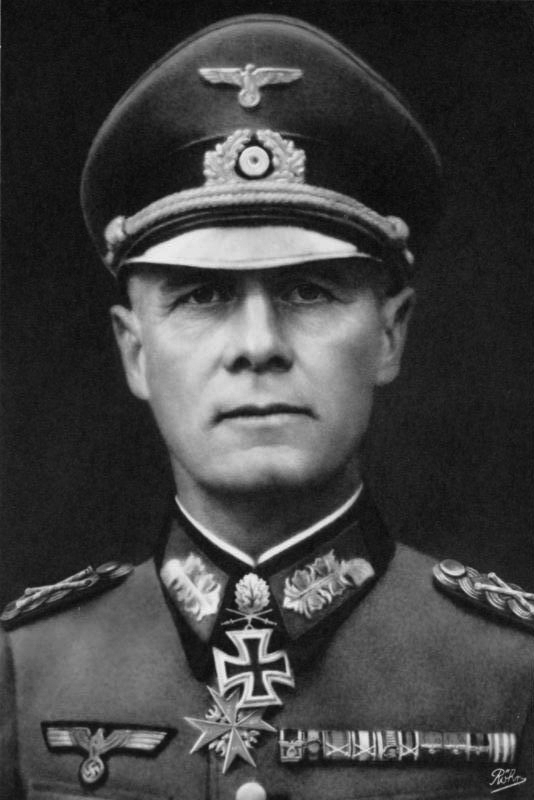
When Rommel was implicated in a plot to kill Hitler, he was allowed to take cyanide to die and his family was spared being killed.
Young Karl was captured and brought to America as a POW. He knew he wanted to return some day.
He received his medical degree in Germany. His field of study was bacteriology. He was following his mentor and thought it a good career pathway.
Just discovered! A new antibiotic was just discovered at the Scripps Institute "that could eliminate the threat of antibiotic-resistant infections for years to come." Scott found this as he's interested in science.
This is also reminiscent of the discovery of new drugs for various mental health conditions.
After Karl graduated from med school he had to find a way to get to America.
A Swedish couple agreed to sponsor him for a year. He worked at Boston School of Public Health. Back then, primitive methods were used to control psychosis or aggressive behavior.
Lobotomy, insulin coma therapy.
Patients would sit in strait-jackets in state hospitals since no one knew what to do with these poor souls.
And then Thorazine - an effective antipsychotic - was discovered in 1950.
State hospitals emptied out, though of course patients returned as mental disorders usually - though certainly not always - last a lifetime.
The great writer Virginia Woolf sadly drowned herself as she didn't wanna experience another bout of mental illness. She died in 1941, nine years before the advent of Thorazine.

They wanted him to be a researcher, which was his forte. He mentioned there were no drugs at the time for TB and if you could see the lung, it had holes in it.
Was wracking my brain to remember which of the German writer Thomas Mann's novels dealt with TB.
 The Magic Mountain, of course. Thomas Mann left Germany before the Nazis got a stronghold there.
The Franz Kafka family were killed in concentation camps.
Read my fictional story "Kafka's Other Woman" here.
Karl was instrumental in the development and testing of many of our earliest drugs such as the above imipramine.
Then he mentioned John Cade of Australia and lithium. Read my lithium blog here.

Karl's favorite med for depression is Effexor. My friend was on Effexor for many years and when she weaned off, she got flu-like symptoms.
Now she's off all meds, like me.
I asked Karl if he believes it's possible to get off meds for good.
He mentioned Dr Laslzo Gyulai who has many of his bipolar patients go off meds. He makes sure, though, they check in frequently with him.
If a patient has trouble sleeping, that's a symptom that perhaps the bipolar is coming back.
Read about Laszlo Gyulai, originally from Hungary, here.
 We had him on the cover of the Compass years ago.

What people go through!

See the white-haired woman on the left?
I gave her a poster about Dr Rickel's presentation when we both attended The Upper Moreland Historical Presentation by Jason Sherman. He'd made a film about The King's Highway.
Doris brought a friend with her.
Whoop-de-doo! All those handouts finally paid off.
It wasn't until the Estes Kefauver Hearings in the U S Congress - Kefauver was a liberal senator from Tennessee - that the FDA was required to list both the efficacy (how well the drug worked) and safety of the drug.
To wit:
One result of his efforts was the Kefauver-Harris Drug Control Act (1962), which, though weaker than the proposed legislation initially introduced by Kefauver, imposed such federal controls on the sale of dangerous drugs as requiring substantial evidence that a drug be both effective and safe as prerequisite to licensing, generic names on drug products, and mandatory disclosure to physicians of information about the effectiveness and side effects of prescription drugs.
Read about it here.
Karl mentioned that drug studies are either paid for by the government or by the drug industry. The latter, of course, are biased. Drug companies ignored information about bad side effects or the high drop-out rate of study subjects.
In time, studies were double-blind - neither the drug administrator nor patient knew if the drug was real or a placebo.
When imipramine - brand name Tofranil - and other early antidepressants were first developed, the patient had to take the drug four times a day.
In time a slow-acting or extended release pill could be taken once a day.
Major problem with these tricyclics, as they're called, was DRY MOUTH. Karl gave the best description of dry mouth I've ever heard.
There was such little saliva that a person could not speak!
Karl mentioned that drug studies are either paid for by the government or by the drug industry. The latter, of course, are biased. Drug companies ignored information about bad side effects or the high drop-out rate of study subjects.
In time, studies were double-blind - neither the drug administrator nor patient knew if the drug was real or a placebo.
When imipramine - brand name Tofranil - and other early antidepressants were first developed, the patient had to take the drug four times a day.
In time, a slow-acting or extended release pill could be taken once a day.
Stay on your medication and if it's not working, take something else.
Ada mentioned that some people in our group are on as many as eight different meds.
"This is terrible!" said Karl. He's had patients like this and carefully weans them off to determine what works and what doesn't.
The person feels so terrible they have no impetus to work.
He's also very interested in panic disorder.
Karl was always interested in ANXIETY. Benzos to treat anxiety were the first developed. Librium.
A man couldn't drive, so his wife drove him everywhere. He sat next to her in the car.

Karl advised the man to change places with his wife. He assured him he would be fine.
As we know, the best results are to have both meds and talk therapy.
Although Karl would see a patient for one of those ridiculous 15-minute med checks, he would speak to a patient in such a caring way, it served as quid pro quo psychotherapy. (I have no idea what that Latin word - or could it be Etruscan? -word means.)
I MUST CONFESS that I took a little nap, started a Part Two, but lost my way. The damn thing wouldn't publish b/c I put a photo on there that Blogface couldn't publish.
Just proves that if you think you have only one more hour to go, that figure will be tripled due to the laws of the universe.
Thanks, Robin and Sandie, for the great party spread! We had plenty of plastic bags - thank you Torrance - to put leftovers in. The zipper skin tangerines are delicious!


Above are Ritz Crisps which I'd never tasted before. And hopefully never will again.

Anthony and Ellen came in late. He sat next to me and shook my hand.
Hi, I said. Did you bring your wife with you?
I thought it was Moe and his wife Terry.
"We all look alike," he said with a smile.


People asked loads of questions.
He sent me a thank-you note before I got home. He lives in Gladwyne and took the turnpike over.
Ruth,
Thank you for inviting me to meet with your fantastic group. I really enjoyed it. Your group was most attentive and enthusiastic. But you did not have to give me a gift. Nevertheless I enjoyed the socks and look forward to reading the book.
By the way my book is not for sale BUT free. Please have anyone who wants a book e-mail me name and address and my assistant will mail the book. I still have 15 samples to mail as gifts.
Have a great week-end!
Karl
Subscribe to:
Posts (Atom)